## The Biggest Electrical Risk in Your Building Is the Guy Who “Made It Work”
We all know that person — the electrician who comes in, fixes the immediate problem, and leaves things “working.”
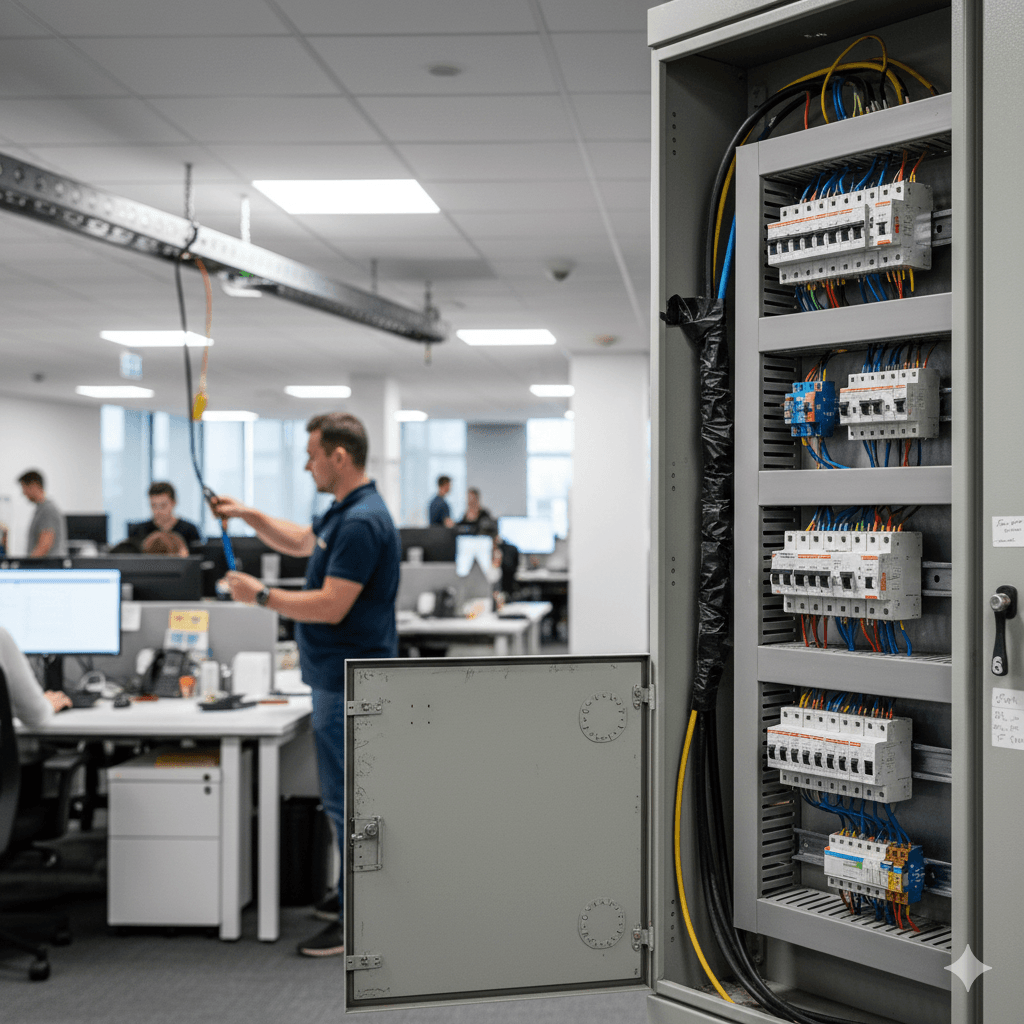
The Biggest Electrical Risk in Your Building Is the Guy Who “Made It Work”
We all know that person — the electrician who comes in, fixes the immediate problem, and leaves things “working.”
Looks neat. Passes inspection. Everyone’s happy… until it isn’t.
After more than a decade in commercial electrical work, I’ve seen firsthand that the biggest risk in most buildings isn’t old equipment or complicated systems — it’s the electrician who just “made it work.”
“Making It Work” Isn’t the Same as Doing It Right
Commercial electrical work isn’t just about getting lights on or breakers to stop tripping.
It’s about:
Designing for full occupancy
Planning for future load
Coordinating circuits with HVAC, IT, and fire systems
Creating redundancy and fault isolation
Ensuring maintenance is safe and straightforward
The guy who “makes it work” skips most of this. He focuses on the short-term fix, not long-term reliability.
Why This Creates Risk
When an electrician shortcuts design thinking:
Circuits are overloaded but hidden
Critical systems aren’t separated
Breakers trip during peak load
Small faults cascade into bigger failures
Emergency isolation is impossible without downtime
Everything “works” until a small change — a new tenant, a new printer, extended operating hours — exposes the weaknesses.
Suddenly, what looked perfect is a liability.
Real-Life Examples
I’ve been called to offices where:
Half a floor loses power when everyone powers up laptops
Server rooms go offline because circuits weren’t separated
Maintenance teams spend hours isolating faults that could’ve been planned for
Every time, the root cause wasn’t equipment failure.
It was short-term thinking disguised as a “working system.”
The Inspection Illusion
Here’s the tricky part: inspections can’t detect this risk.
A system that “works” can still be fragile:
Circuits operating near maximum capacity
No room for expansion
Minimal redundancy
Faults affecting multiple systems
Compliance doesn’t equal reliability. It just confirms the minimum standard — not what a building actually needs.
How Experienced Commercial Electricians Prevent This
A Commercial Electrician Sydney with real commercial experience doesn’t just make it work. They:
Design with realistic loads and spare capacity
Separate critical and general circuits
Build for growth and upgrades
Include redundancy and safe isolation points
Anticipate real-world usage, not just handover
They think like a building operator, not a quick-fix installer.
Why “Making It Work” Costs More Than Doing It Right
The cost of shortcuts is invisible at first, but accumulates fast:
Frequent call-outs
Downtime affecting staff and tenants
Emergency upgrades
Equipment damage from overload
Lost confidence in the electrical system
Fixing the symptom is cheap. Fixing the design after the fact is expensive — and disruptive.
The Takeaway
The biggest electrical risk in your building isn’t the old switchboards, outdated panels, or aging equipment.
It’s the mindset of the person who just “made it work.”
Commercial electrical work isn’t about temporary fixes or appearances.
It’s about design, foresight, and resilience.
If your system only “works” — and no one ever asked about growth, redundancy, or real-world load — then it’s not working properly.
The good news: the right commercial electrician can fix that before it becomes a crisis.